The European Core Invoice Explained in Simple Terms
The European Core Invoice (EN 16931) is the common language for e‑invoicing in the EU. Learn in plain English what it is, why it exists, and how tools like BillingNow can help you stay compliant without technical headaches.
The European Core Invoice Explained in Simple Terms
If you work with invoices in Europe, you've probably heard about "European Core Invoice" or the standard EN 16931. It sounds technical, but the idea is simple: help everyone in the EU exchange electronic invoices in a common, structured format.
This article explains what the European Core Invoice is, why it matters for your business, and how e‑invoicing platforms like BillingNow can make compliance much easier.
What Is the European Core Invoice?
The European Core Invoice is a standardized data model for electronic invoices defined by the EU under EN 16931. Instead of every country, company, and software using its own invoice format, the EU created a common structure so systems can "talk" to each other.
In simple terms:
- It defines which fields an electronic invoice should have (e.g. seller, buyer, VAT, totals).
- It defines how those fields are structured and named.
- It focuses on machine-readable e‑invoices, not on PDF images of invoices.
Because all compliant systems follow this same structure, an invoice sent from a company in Germany can be understood by a public authority in Italy or a business in France without manual retyping.
Why Did the EU Create This Standard?
The main goals behind the European Core Invoice are:
- Interoperability: Make it easier for different systems and countries to exchange invoices.
- Cost reduction: Reduce manual data entry, paper, and errors.
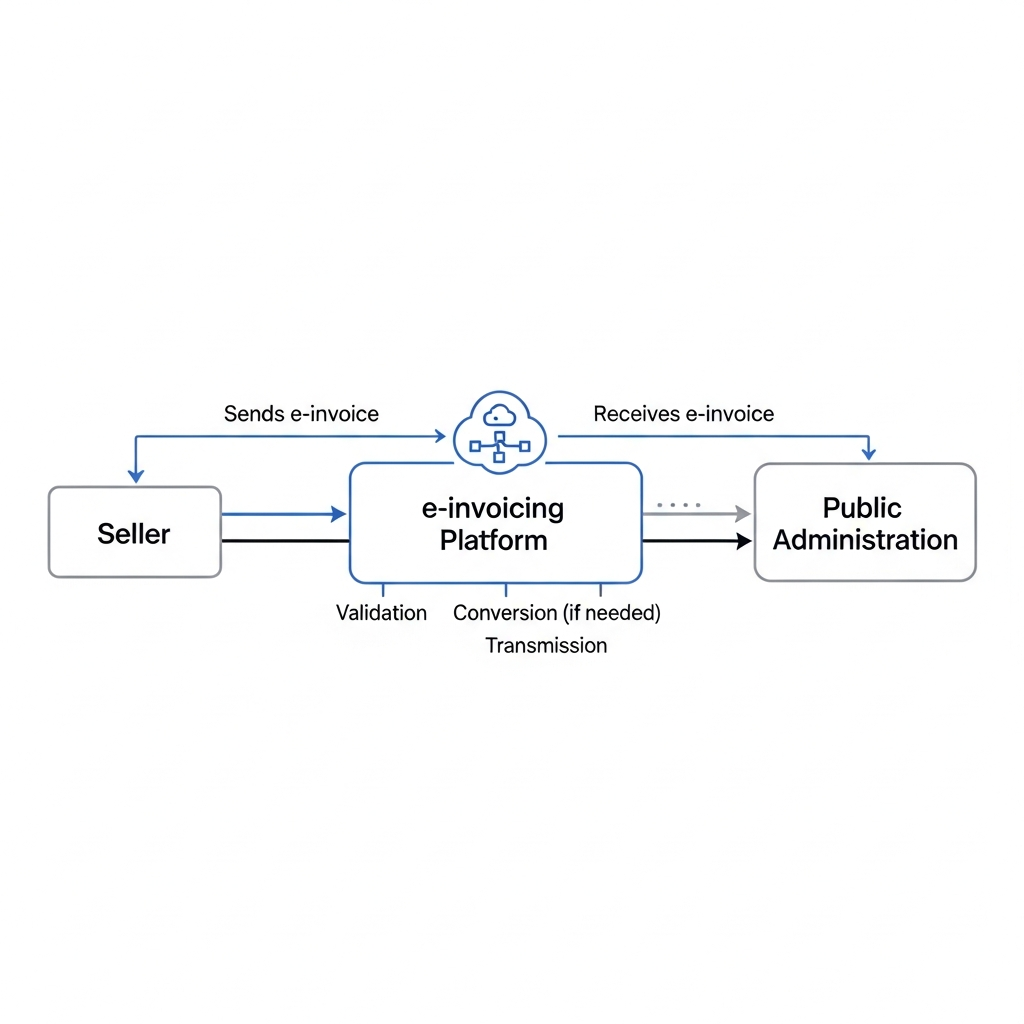
- Public procurement compliance: Public administrations across the EU must be able to receive e‑invoices following EN 16931.
- Faster payments: With structured data, validation and processing become quicker.
How the European Core Invoice Works (Without the Jargon)
Under the hood, the standard defines a data model and syntax bindings (e.g. UBL, CII). But you don't need to understand XML or schemas to use it effectively.
Key concepts in plain language
- Mandatory fields: Some invoice elements must be present, like invoice number, issue date, seller name.
- Optional fields: Others are optional depending on your use case (e.g. discount terms, tax exemptions).
- Validation rules: There are built-in checks like "VAT total must match the sum of line VAT amounts".
Think of it like a template that all compliant invoices have to follow.
{
  "invoiceNumber": "INV-2025-0012",
  "issueDate": "2025-12-16",
  "seller": {
    "name": "ACME GmbH",
    "vatId": "DE123456789"
  },
  "buyer": {
    "name": "City of Berlin",
    "vatId": "DE987654321"
  },
  "lines": [
    {
      "description": "Consulting services",
      "quantity": 10,
      "unitPrice": 100.00,
      "vatRate": 19
    }
  ],
  "totals": {
    "net": 1000.00,
    "vat": 190.00,
    "gross": 1190.00
  }
}
Note: This is a simplified JSON-style example just to illustrate the idea. Real EN 16931 invoices usually use XML formats like UBL.
Who Needs to Care About the European Core Invoice?
You should care about EN 16931 if you:
- Sell goods or services to public sector customers in the EU (central or local government, agencies, etc.).
- Work with cross-border B2B invoicing in Europe.
- Want to automate your invoicing and accounting workflows.
For small and medium-sized businesses, the main challenge is not the standard itself, but implementing it correctly without adding complexity.
This is where specialized solutions such as BillingNow come in.

How BillingNow Can Help You Adopt the European Core Invoice
Using the European Core Invoice standard doesn't mean you have to design your own XML or deal with technical mappings. Modern platforms abstract all that away.
Benefits of using BillingNow for EN 16931
- Built-in compliance: Invoicing formats can be aligned with EN 16931 so your documents meet EU expectations.
- No need for technical knowledge: You work with friendly forms; BillingNow handles the structured data behind the scenes.
- Integration-ready: Connect e‑invoices to your ERP, accounting system, or other tools.
- Scalable: Suitable for freelancers, SMEs, and growing companies that need robust e‑invoicing.
Practical Steps to Get Started
You can break adoption of the European Core Invoice into a few simple steps.
Identify whether your customers (especially public entities) already require EN 16931-compliant e-invoices.
Select a platform like BillingNow that supports structured e-invoicing and can adapt to EU requirements.
Make sure all important information (VAT IDs, legal names, item details) is consistently captured in your system.
Start by sending e‑invoices to a small number of customers and verify that they can receive and process them correctly.
Key Takeaways
- The European Core Invoice (EN 16931) is the EU's standard for structured electronic invoices.
- It makes invoices interoperable, easier to process, and mandatory in many public procurement scenarios.
- You don't need to understand XML to benefit from it – using a solution like BillingNow can hide the complexity and keep you compliant.
By adopting the European Core Invoice early and choosing the right tools, you make your invoicing process more reliable today and ready for future EU digital requirements.